Issuer layer
Review issuer, reserve disclosures, redemption eligibility, and the practical path from token to cash.
Stablecoins can be useful settlement and collateral tools, but the token itself does not automatically pay income. Every reward comes from a platform, borrower, trading strategy, protocol incentive, or other economic source. YieldMask maps those layers before comparing APY.
Use the same comparison order every time: define the rate, translate it into dollars, map access, subtract friction, and identify the risk engine.
Review issuer, reserve disclosures, redemption eligibility, and the practical path from token to cash.
Distinguish self-custody, exchange custody, and yield-platform custody. Each changes control and recovery.
Name borrower interest, trading fees, incentive subsidy, liquidity provision, or another source.
Inspect smart contracts, oracles, admin keys, governance, bridges, and network dependencies.
Confirm lockups, withdrawal queues, supported chains, fees, and stressed liquidity.
Model depegging, platform failure, contract exploits, and correlated dependencies.
These fields turn unlike product pages into a common worksheet. The table is educational and contains no live quotes.
| Yield path | Reward source | Core risks |
|---|---|---|
| Exchange reward | Platform lending or promotion | Custody, credit, withdrawal |
| On-chain lending | Borrower interest | Contract, oracle, liquidation, liquidity |
| Stablecoin pool | Trading fees and incentives | Depeg imbalance and contract risk |
| Vault strategy | Automated protocol positions | Layered contracts and manager controls |
| Tokenized Treasury | Underlying portfolio income | Legal wrapper, redemption, network |
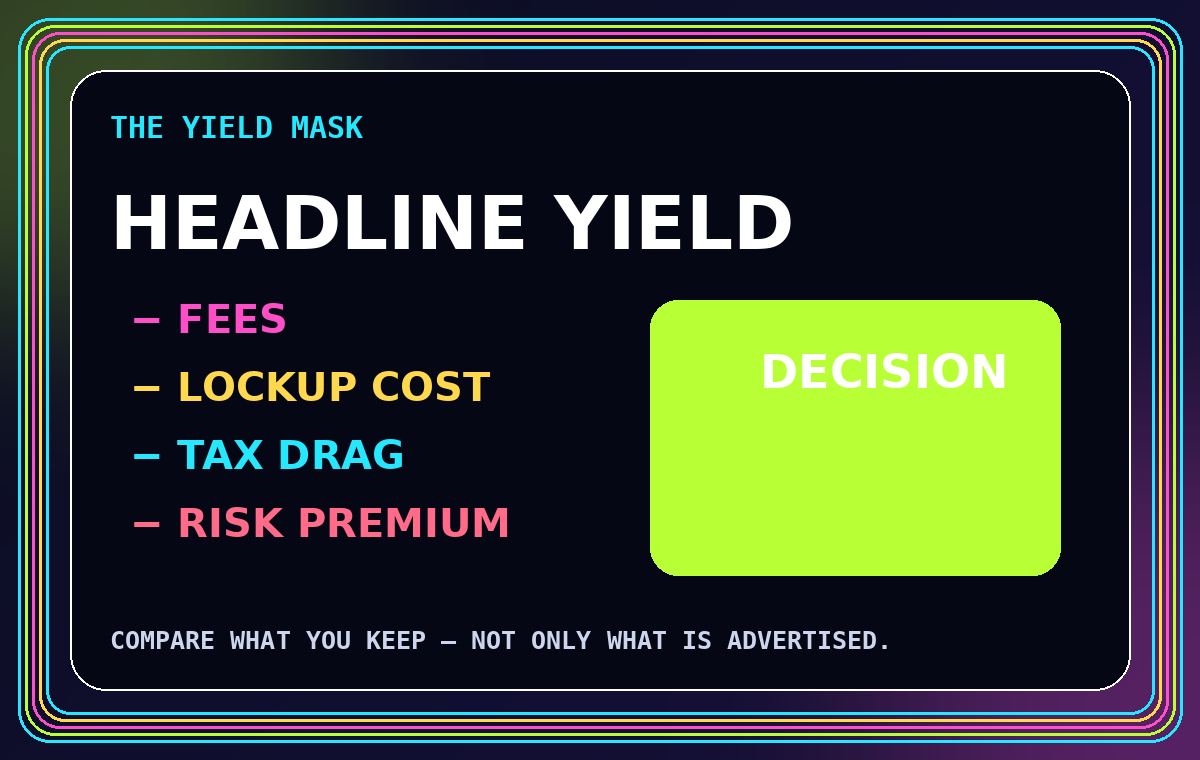
Each guide uses one authoritative external reference and links the mechanism back to practical comparison fields.
A layer-by-layer method for evaluating USDC and USDT income offers without confusing token reserves, platform rewards, lending risk, and DeFi incentives.
Read the guide
A practical way to decompose DeFi lending, liquidity-pool, vault, and incentive yields into fees, leverage, smart-contract, oracle, governance, and exit risk.
Read the guide
A due-diligence framework for tokenized Treasury funds and real-world assets covering legal claims, custody, liquidity, smart contracts, fees, and redemption.
Read the guideNo. Income requires a separate platform, lending, liquidity, or investment arrangement.
Do not assume it is. Stablecoin and platform arrangements are not the same as insured bank deposits.
Borrowing demand, incentives, liquidity, protocol parameters, and market conditions can all change.